Involving society in policy development? Not just once at a specific moment, but as part of an ongoing process of learning and improvement? Within the Dutch Ministry of Social Affairs and Employment (SZW), the Innovation Support Team has the role of promoting and strengthening this process. It is a complex and, at the same time, incredibly important change process. It is also a process in which participation is not an end in itself, but rather the way to ensure that policy is properly aligned with people’s lives. All in all, it is an inspiring government project, to which I am proud to contribute in my own role.

I was asked to design a monitor that shows how departments within the ministry work with citizens and social partners. Not to monitor, but to reflect, learn and guide. I took on the challenge. The result is a constantly evolving QuickScan. A tool that not only maps out why departments consider participation important, but above all what we have in mind and how we achieve that desired involvement. All this so that we can learn from each other.
A snapshot with depth

The QuickScan – now developed in co-creation with a diverse group of colleagues – has become anything but a static measurement. Think of it as a learning exploration. The data, translated into so-called “talking pictures”, provides insight into where we are in the process, for example, but also what works and where opportunities lie for strengthening participation.

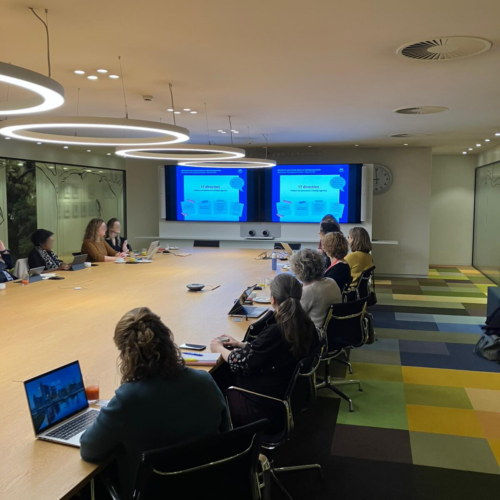
Cooperation is central to this long-term government project. The QuickScan provides insight, but it is only in joint reflection with a community of colleagues involved that this really takes on meaning. We facilitate discussions in which good practices are shared, colleagues inspire each other and a culture of learning and development is encouraged. Discussions with one central question: how can we use the insights gained to learn together and make a difference? After all, real participation requires more than just a tool. It requires trust, room to experiment and shared ownership.

Learning by doing

It is primarily the learning approach that makes this project so special. Although we are currently still in the phase of taking a sober look at current practices, we are working step by step towards the next stage. What exactly do these insights mean? How do we use them to achieve our goals? And what are the benefits? During discussions with the teams within the ministry, we take a critical look at both successes and pitfalls. Because we know that this is where there is a lot to learn. And so the QuickScan grows along with the organisation.

The success of the project

The strength of this approach? I could say a lot about it, but essentially it boils down to the following: the combination of data and dialogue. The QuickScan provides the ministry with insights, but the discussions make it personal. This not only creates an overview, but also a common language. And with that, participation can be strengthened step by step.