Designing policy with and for the people it is meant to serve is a key ambition of the Dutch Ministry of Social Affairs and Employment (SZW). But how do you translate that ambition into everyday practice? How do you ensure that policies truly reflect the needs and lived realities of citizens? This was the challenge I worked on in 2025 as part of the Support Team Innovation. I developed the QuickScan: a monitoring tool that not only provides insight into how SZW approaches participatory policymaking. But more importantly: sets a learning movement in motion.

The first step towards a learning culture
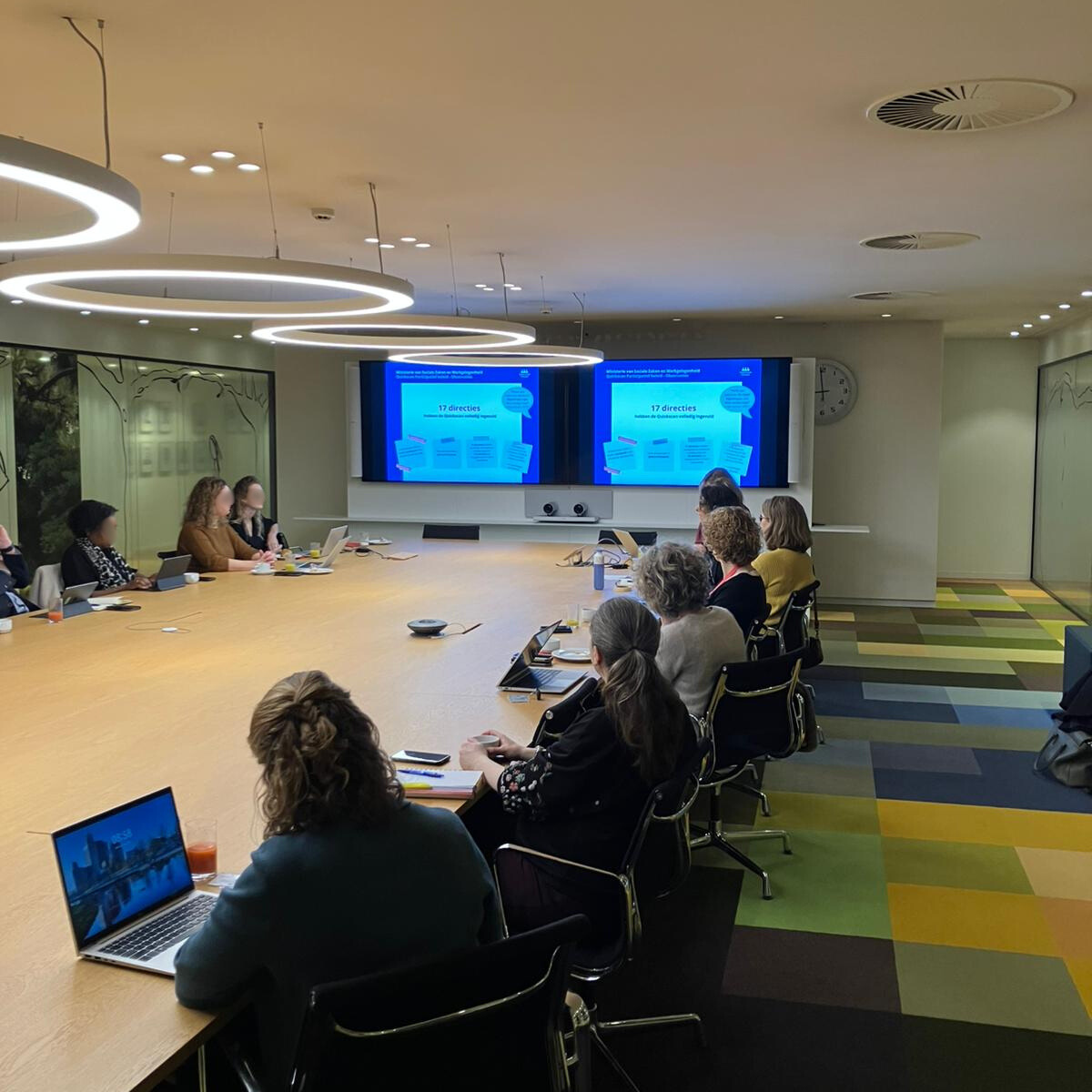
One of the Ministry’s strategic goals is to develop policies that better align with what is happening in society. To contribute meaningfully to that goal, we first needed a clear picture of the current situation: a shared understanding of how the various directorates within the Ministry involve citizens and people with lived experience in policymaking.

The QuickScan proved to be an effective solution. It is important to stress, however, that this tool is much more than a measurement instrument. It serves as a starting point for collective learning and reflection, and for taking concrete steps towards better policy. In that sense, it represents an important first step in fostering a learning culture around participatory policymaking.
The power of continuity
In my view, this annual gathering in Kigoma is far more than a training; it is a catalyst for change and growth. It nurtures both personal development and collective action, underscoring that when leaders grow together, entire communities grow with them. For me personally, it remains an honour to guide such a moment of acceleration and connection.

Insight through data
To generate the desired insights, the Support Team Innovation developed a set of questions, collected data across all directorates, and examined motivations, methods, successes, and bottlenecks related to participatory work. These insights were then translated into visual summaries: clear, accessible reports that not only show the current state of play, but also spark meaningful conversations. About what is working well, what could be improved, and how to move forward together. That, ultimately, was the core objective: learning and improving as a collective.

Project lead and designer
As the project owner and designer of the QuickScan, I worked two days a week alongside the Support Team Innovation. In addition, I processed input from experts across various directorates and facilitated interpretation sessions. I quickly realized that my part-time involvement gave me a unique position: I was both part of the team and able to look at the work with a fresh, external perspective. This helped me take ownership and continuously evolve the project.

From the first design phase of the QuickScan alone, I took away several valuable insights. For instance, that a project like this is never truly finished. Each iteration brings new insights and opportunities. I also learned how essential psychological safety is in such a process. If you want people to truly learn, they need to feel safe enough to make mistakes and to be open about challenges. And finally, the power of visualization became clear. This makes complex information understandable and open for discussion.

What’s next
At the outset of this assignment, our team was asked to work in a design-driven and iterative way. What doesn’t work in one round is addressed in the next. This approach enables continuous improvement, but it also requires perseverance, flexibility, and the ability to keep people engaged over a longer period of time. Those who know me well know that I thrive on finishing what I start, involving others, and continuously seeking improvement. Building something together that has lasting impact gives me a tremendous amount of energy.

That is why I am especially excited that the Ministry has asked me to remain involved in the further development of the QuickScan. Together with a group of professionals, we are working towards a culture in which participatory policymaking becomes the norm. As a creative strategist, I can hardly imagine anything more rewarding.

More information
Are you interested in a participatory monitoring approach that supports better policy? A journey of shared learning, reflection, and growth? I would be happy to share my experiences and insights. Feel free to get in touch so we can continue the conversation.